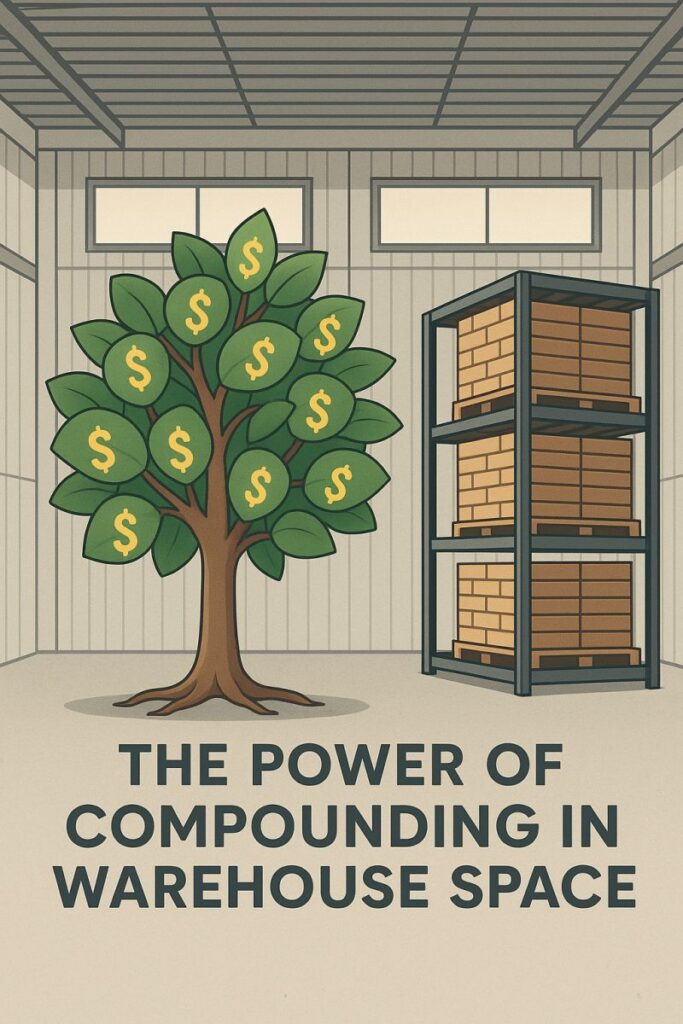
Just as in finance, compounding means small gains added repeatedly turn into exponential results. In warehouses, compounding works in a space–efficiency loop:
1. Vertical Height Utilization
If you use just one extra meter of height across your warehouse with racking, you don’t just add 10% more space — you free up an equivalent floor area that would otherwise require land, aisles, construction, and utilities. Over the years, these compounds: higher stacking → smaller footprint → lower rent & energy per pallet → cost savings reinvested into more efficient systems.
2. Aisle Optimization
Narrower aisles (using VNA trucks or shuttles) don’t just save a little space. They compound with vertical utilization: Wider aisles + no height use = wasted cube. Narrow aisles + max height = exponential gain in pallet positions per square meter.
3. FIFO / Flow-Through Systems
A well-designed FIFO racking (drive-in, push-back, pallet flow) ensures you don’t “lose space” to dead stock. Better inventory flow = fewer obstructions = higher utilization of every cubic meter. 4. Cost Compounding
If your warehouse rent is $5 per sq. ft. per year, every 1% improvement in utilization compounds every year — that’s savings today, and multiplied benefits for the next 5–10 years.
Example: Improving utilization from 60% → 80% isn’t just 20% more storage. It means 33% more capacity without expanding the footprint. That compounds into saved land costs, deferred capex, reduced utilities, and lower cost per pallet handled.
In conclusion: The “power of compounding” in warehouse space means every small improvement in height use, aisle width, or storage density multiplies over time into exponential savings — not just in storage, but in rent, operations, energy, and throughput.